
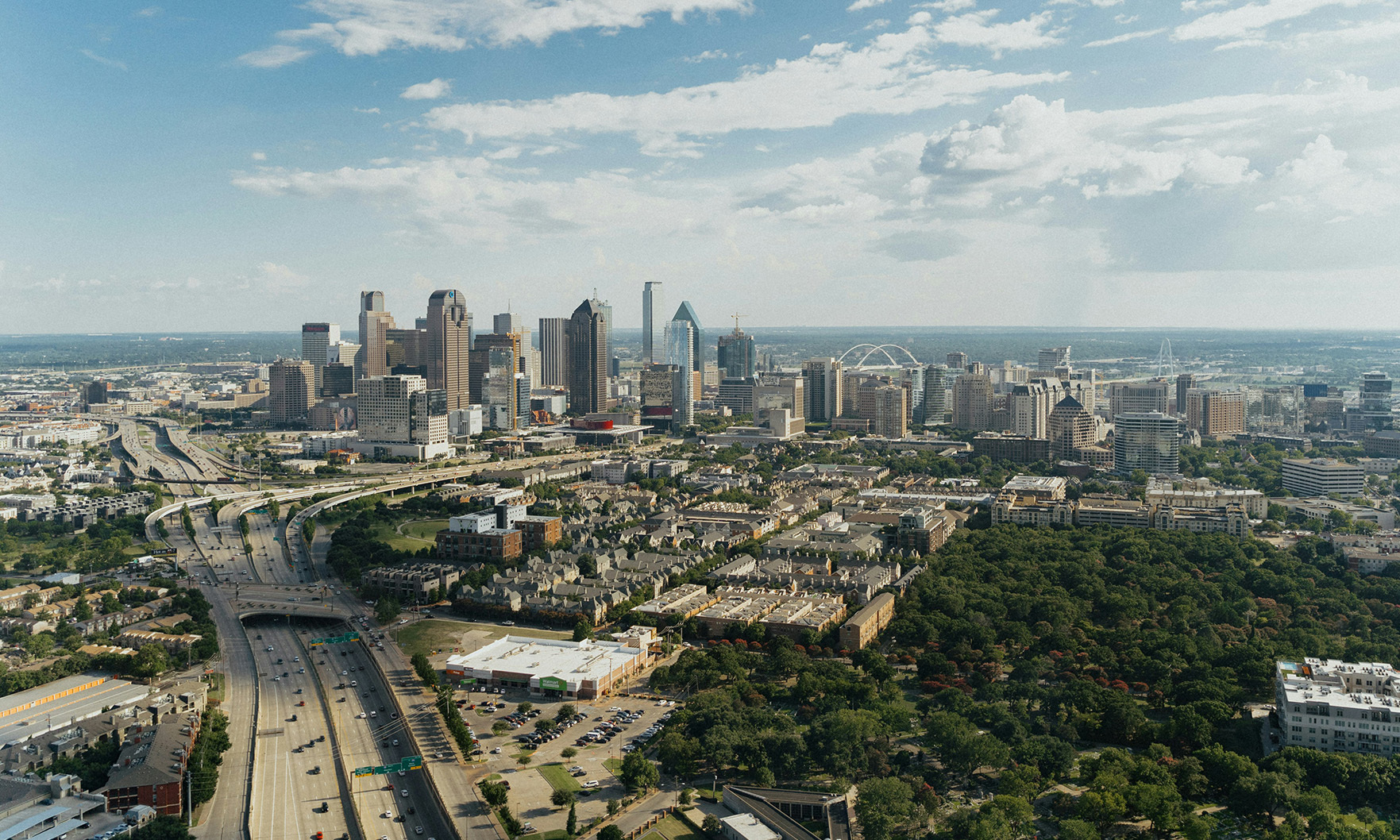
For most of the past decade, buying a home in Dallas-Fort Worth meant competing in a market that rewarded speed over strategy. Bidding wars were routine, inventory was sparse and prices climbed year after year as corporate relocations and population growth kept demand running well ahead of supply. That dynamic has now shifted in a significant way, and the numbers behind the shift are worth paying attention to.
A recent analysis by real estate marketplace Zoocasa ranked Dallas second among major Southern cities for improving housing affordability, based on year-over-year changes in median single-family home prices. In 2024, the median price for a single-family home in Dallas sat near $398,000. By 2025, that figure had dropped to around $375,000, a decline of roughly 5.7%. Only one Southern market outpaced that correction. To put it plainly: Dallas is now meaningfully more accessible to buyers than it was just 12 months ago, and several converging forces suggest that window is not about to close overnight.
The story behind that price movement starts with supply. During the pandemic boom years, the Dallas-Fort Worth metroplex permitted and built aggressively. Developers responded rationally to extraordinary demand, and for a while the math worked. But when mortgage rates climbed sharply in 2022 and 2023, buyer demand cooled faster than the construction pipeline could adjust. The result was a market that found itself, by 2025, holding substantially more inventory than it had seen in years. According to data from the North Texas Real Estate Information System, active listings across the metroplex had risen sharply compared to prior years, with months of supply expanding well beyond the levels associated with a seller’s market. Homes that once moved in days were sitting for weeks.
That inventory story continues into 2026. Current market data shows 5,848 active listings in Dallas, with 1,436 price-reduced homes and an average of 51 days on market, up from 45 days the same time last year. Those figures, drawn from the Dallas market trends page, tell a consistent story: sellers are competing for buyer attention rather than the other way around. The median sale price in March 2026 came in at $425,000, and 5,202 homes sold that month, up from 4,877 the year prior. Volume is rising even as days on market extend, which points to a market finding its footing rather than one in freefall.
This inventory buildup has played out differently depending on where you look within the metro. The outer growth corridors — Frisco, McKinney, Prosper and similar communities that absorbed the heaviest wave of new construction — are showing the most pronounced pricing pressure. Closer-in neighborhoods with tighter land constraints are holding up better, a pattern that reflects a broader truth about DFW: it is not one market but many, and zip code matters considerably more than the headline number when making actual decisions.
For buyers, the practical implications are real. Price reductions are common, inspection contingencies and negotiating leverage have returned as standard features of the transaction process, and there are currently 450 new listings hitting the Dallas market alongside nearly 200 open houses available on any given week. The National Association of Realtors has noted that pending home sales nationally have grown year-over-year, with Chief Economist Lawrence Yun pointing to building homebuyer momentum. In Dallas specifically, that momentum is being supported by a market structure that now genuinely offers buyers choices they did not have before.
The affordability improvement is also occurring in the context of a broader Texas correction. Austin and San Antonio have seen their own price adjustments, but Dallas stands out for two reasons. First, the scale of the correction is among the steepest of any major metro in the region. Second, the underlying demand drivers for the area remain intact. Dallas was the top destination for movers in 2025, according to the Zoocasa study, and the region’s employment base remains diversified across finance, technology, logistics, and healthcare. The correction, in other words, is a supply-and-rate story, not a demand collapse.
That distinction matters for anyone trying to read this market accurately. A price decline driven by an oversupply of new construction in outer suburbs is a very different signal from one driven by employers leaving or population shrinking. DFW is experiencing the former, not the latter. Buyers who understand that difference can approach the current moment as an opportunity rather than a warning sign. Current listings across Dallas neighborhoods reflect that range of conditions, from more steeply corrected suburban submarkets to stabler infill areas, and a careful look at current homes for sale in Dallas reveals how meaningfully that variation plays out at the neighborhood level.
Mortgage rates are also part of the calculus. The 30-year fixed rate has come down from its 2023 peak, though it remains elevated by historical standards. Most housing economists expect further modest declines through 2026. Bright MLS projects rates could approach 6.15% by year-end if inflation continues to moderate. For buyers in Dallas who are weighing whether to act now or wait, the rate trajectory provides less urgency than the inventory story. The key question is whether the current pricing environment persists, and most indicators suggest it will, at least through the near term.
What this market moment represents, at a structural level, is a rebalancing after an extraordinary run. Dallas spent roughly a decade as one of the country’s hottest real estate destinations, and prices reflected that. The correction now underway is bringing values closer in line with fundamentals. For buyers who were priced out during the peak years, this is a substantive change. For investors watching the market, it is a signal that the floor is closer than it might look from the outside. And for the broader business community that tracks DFW as an indicator of Sunbelt economic health, the housing reset is part of a larger normalization story that points toward a more sustainable growth trajectory ahead.